Children, Teens & Young Adults:
.
The Developing Ensemble
Empowering Neurodivergent Voices Honoring all communication styles
Growing up is a high-stakes performance. We help children and adolescents navigate the shift from childhood play to teenage independence, especially when the 'script' at home feels stuck in conflict. By using drama therapy, we give your child a rehearsal space to:
Express the Unsaid: Move beyond "I don't know" and use creative action to communicate big emotions.
Develop Social Agility: Practice interpersonal "improv" to build confidence in school and social circles.
Shift Family Dynamics: Step out of the "rebel" or "troublemaker" role and into a more collaborative version of themselves.
Parents & Couples

The Co-Directors
When you’re in the thick of family life, it’s easy to lose your own connection as a couple. We help partners move from being “emergency responders" back into being creative collaborators. Whether you are co-parenting through a transition or looking to strengthen your own bond, our sessions provide a space to:
Break the "Conflict Loop": Identify the repetitive arguments that keep you feeling stuck and improvise new ways to hear each other.
Recenter the Partnership: Use drama therapy to step out of "parent mode" and reconnect with the individual roles you play for one another.
Model Healthy Change: By transforming your own communication, you set a new stage for how your children learn to handle conflict and connection.
The Individual Journey


Recovery Ensemble (ACOA)
Rewriting the Roles You Learned to Play
Growing up in a home shaped by addiction, trauma, or dysfunction often means learning the same unspoken stage directions: don't talk, don't trust, don't feel. Those directions kept you safe once — but they can outlast the production that created them, showing up years later in how you relate, trust, and cope now. We use creativity, the arts, and drama therapy to help you embody the 12 Steps rather than just study them — working through recovery in the body, not only in your head — while relearning what it feels like to talk, trust, and feel again, and building the kind of supportive company that lasting recovery depends on.
Every Story Deserves the Stage
Whether you're a parent navigating a child's coming out, a couple building a family outside the traditional script, or an LGBTQIA+ young person figuring out who they are inside their family system, we hold space for the whole story — without asking anyone to shrink themselves to fit an old role. We also offer specialized trauma work addressing the specific types of trauma unique to, or heavily impacting, the LGBTQIA+ community:
Minority Stress & Microaggressions — healing from the cumulative impact of chronic discrimination, hypervigilance, and everyday prejudice
Family of Origin & Relational Trauma — recovering from rejection, conditional acceptance, conditional love, or childhood abandonment
Coming Out & Closet Trauma — working through the distress, fear, or forced exposures associated with identity reveal or concealment

The Final Act, Rewritten
When the Story Isn't Over, Just Changing
Loss doesn't only mean a death — it can be a relationship, an identity, a version of your family that no longer exists, or a dream that had to be set aside.
Langston Hughes' A Dream Deferred asks what happens to a dream that goes unmet — whether it withers, or festers, or simply waits. Unprocessed grief tends to do the same.
We approach grief through trauma-informed care, meeting it in the body and at the pace it actually moves, not the pace others expect — including grief that often goes unacknowledged elsewhere, like loss within the LGBTQIA+ community, chosen family, or relationships that mainstream grief support doesn't always recognize.

Family Solutions
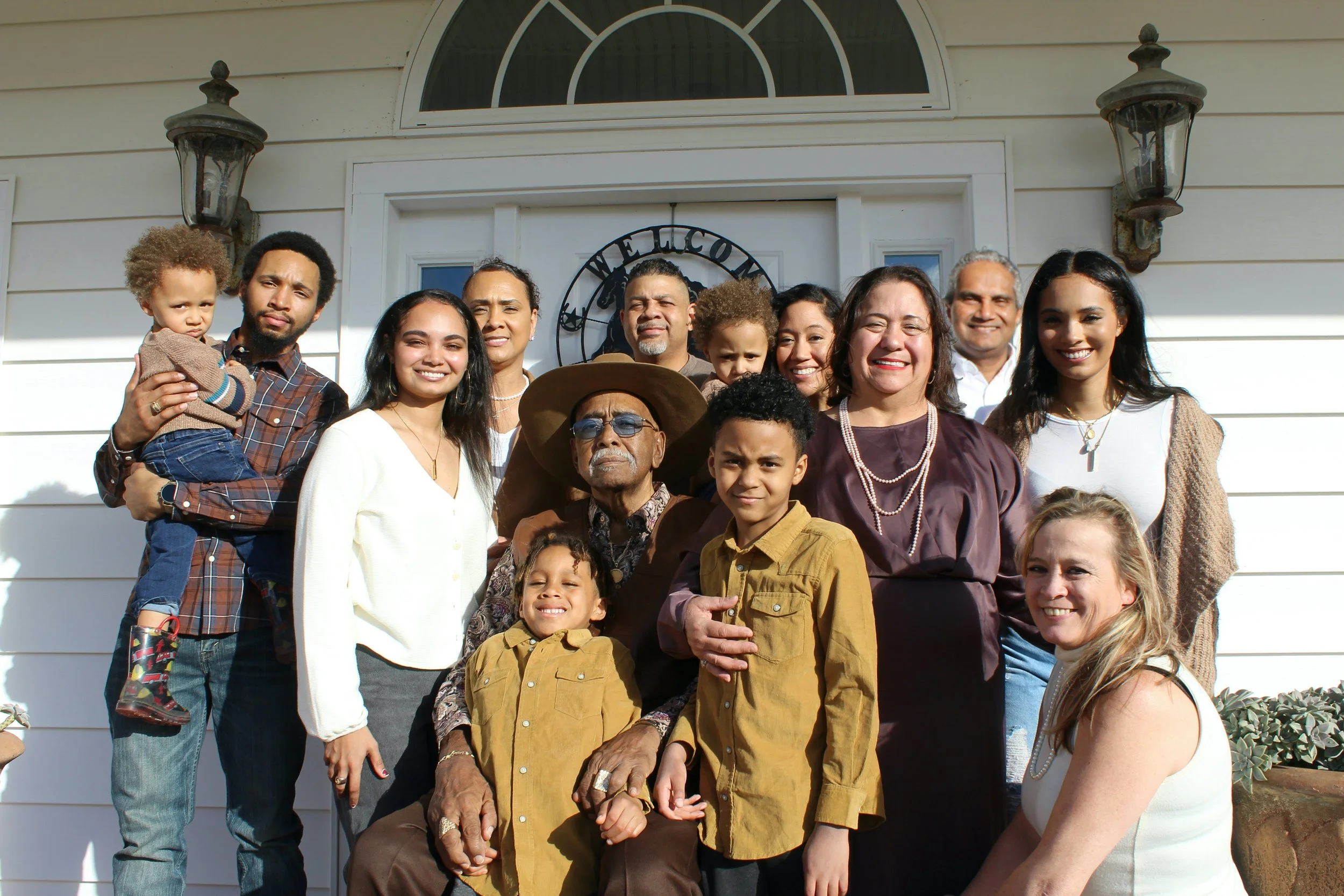
Where the Whole Cast Comes Together
Every role in this story matters — which is why our work doesn't stop at any one person's part in it. Using the Carter & McGoldrick Family Life Cycle Model, we map exactly where your family is stuck as a whole, and build a path forward that includes everyone: parents, children, extended family, whoever's part of the production.
We also draw on Froma Walsh's Family Resilience Framework — the understanding that resilience isn't a straight line back to "normal," but a nonlinear process families move through in their own time, in their own way. Three themes tend to run through the work, whatever brought your family here:
What your family believes — the meaning you make of what you're facing, the outlook you carry into it, and the sense of something larger holding you together
How your family is organized — the flexibility to bend without breaking, the connection that holds even under strain, and the resources you can actually lean on
How your family communicates — the clarity, the honest expression of feeling, and the ability to solve problems together instead of alone
That work usually looks like a combination of weekly virtual sessions, which build awareness and connection over time, and in-person Intensives, dedicated stretches where the whole family steps into the work together using psychodrama — rehearsing the version of your family you're trying to become, before the real thing has to happen without practice.
Whatever brought you here — a blended family finding its footing, a recovery journey, a season of grief, a teenager who's stopped talking — the goal is the same: help your family find its way back to working as an ensemble, not a cast of characters each performing alone